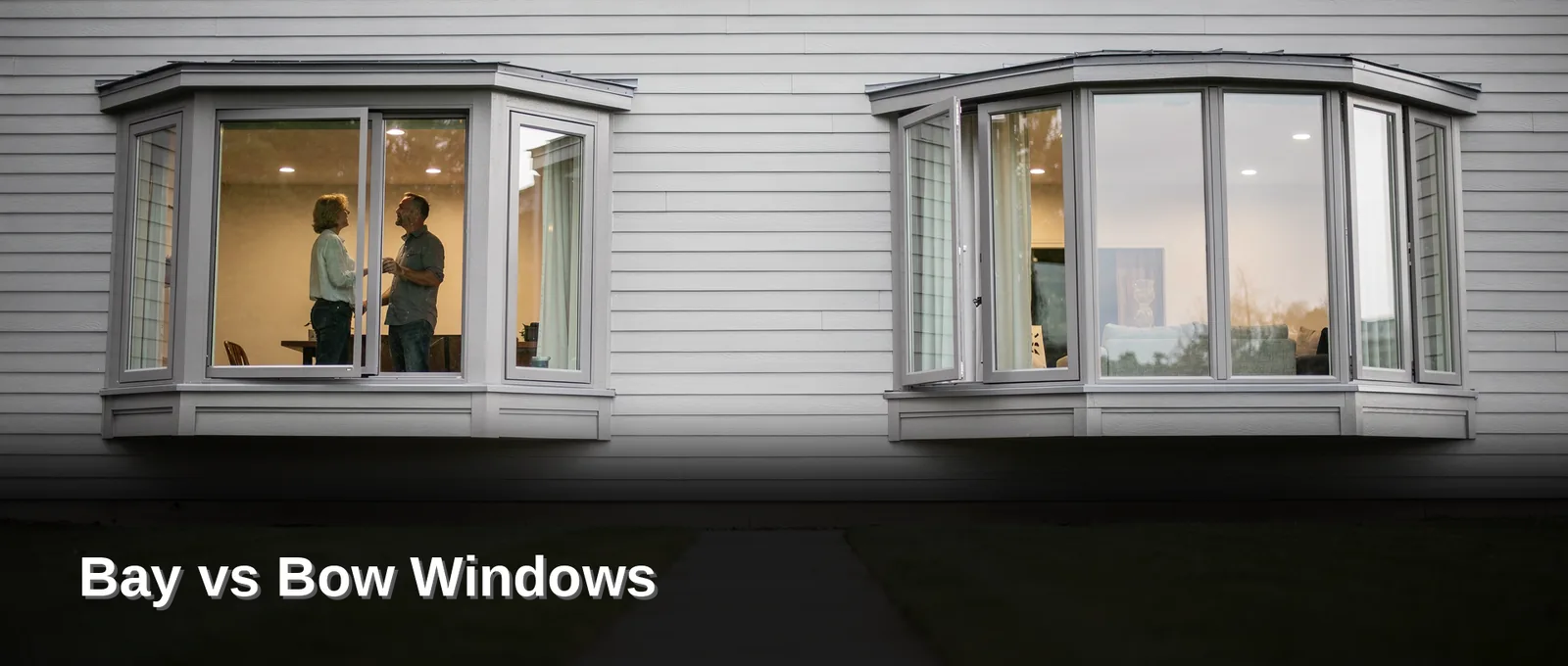
Bay and bow windows both push living space outward and flood a room with light — the difference is the shape. A bay window uses three panels set at sharp angles to form a trapezoidal projection; a bow window uses four or more panels in a gentle, sweeping curve. Both add real appeal (and resale value) to a North Dakota home. For most traditional homes, a bay window delivers the stronger return; a bow window wins when the architecture rewards a curved silhouette. We install both — see our bay & bow windows.
Key Takeaways
- Bay windows add usable square footage — a reading nook, breakfast alcove, or plant shelf — which buyers read as real functional space.
- Bow windows typically cost more (more panels, custom curved framing), so the net return is strongest when the home’s style suits a curve.
- Bay windows tend to pay back faster on traditional ND homes thanks to lower cost and broad architectural fit.
- Both need structural reinforcement and climate-specific engineering to prevent moisture damage and fogging.
How Do Bay and Bow Windows Differ?
Bay windows create an angular silhouette — a fixed center picture window flanked by operable side units. Bow windows produce a rounded exterior arc from four or more equal panels. Both extend the room outward and brighten it; which one fits comes down to your home’s architecture and budget.
| Feature | Bay Window | Bow Window |
|---|---|---|
| Panel count | 3 | 4 or more |
| Shape | Angular, trapezoidal | Curved, semi-circular |
| Interior space | Deeper projection (nook-friendly) | Wider, shallower projection |
| Structural needs | Support platform + roof | Extended support + custom framing |
| Relative cost | Lower | Higher (custom fabrication) |
| Best architectural fit | Traditional, Craftsman, Colonial | Cottage, Victorian, contemporary curves |
Which Style Adds More Home Value?
Both increase resale value and curb appeal — the return comes from expanded living space, more natural light, and a distinctive profile flat windows can’t match. They just get there differently.
How a bay window adds value
A bay window adds usable floor space. That projection becomes a reading nook, a breakfast alcove, or a plant shelf — and buyers perceive gained square footage as real, functional living space, which tends to lift a home’s appeal at resale.
How a bow window adds value
A bow window delivers a comparable boost through a different path: its gentle curve creates a panoramic effect a bay can’t replicate. The trade-off is cost — the extra panels and custom framing make it a higher investment, so the net return is strongest when the home’s architecture specifically rewards a curved projection.
For most North Dakota homes — which lean traditional — a bay window usually delivers the stronger value: more usable space, lower cost, and broad architectural fit mean a faster payback. A bow is the better call when the home’s style calls for the curve.
What Should ND Homeowners Consider Before Installing?
Both styles project outward, so both need structural planning before installation. A bay window requires proper roof flashing and structural reinforcement to prevent water damage and keep the projection stable over time — without those safeguards, moisture can get into the wall cavity and lead to costly repairs down the road.
How do North Dakota winters affect bay and bow windows?
Temperature swings from sub-zero winters to humid summers test every part of a projection window. We install ENERGY STAR®-certified windows built to handle Red River Valley wind loads, summer humidity, and winter extremes — with triple-pane options for the coldest exposures. Standard units without climate-specific engineering can lose their seal and fog between the panes within a few seasons.
What installation details protect the investment?
Installation quality decides whether a bay or bow window performs for decades or fails early. We use our own in-house crews — never subcontractors — and back every project with a 100% transferable lifetime warranty. Crew expertise and warranty strength matter as much as the window itself.
Book Your Free In-Home Estimate →
Family-owned since 2006 · Installed by our own crews · Lifetime warranty. Explore window replacement in Bismarck or Fargo.
Frequently Asked Questions
Which style adds more home value, bay or bow?
Both increase resale value and curb appeal. A bay window adds usable square footage and broad architectural fit, so it usually offers the stronger return on a traditional ND home. A bow window’s curved silhouette adds value best when the home’s style suits the curve.
Which costs more to install, a bay or bow window?
Bow windows typically cost more — they use more individual panels and custom curved framing. A bay window needs fewer panels and a simpler support structure, which keeps its cost lower.
Do bay and bow windows hold up to North Dakota winters?
Yes, when they’re built and installed for the climate. We install ENERGY STAR®-certified projection windows engineered for wind load, humidity, and sub-zero cold, with proper flashing and reinforcement so the seal and structure last.
Conclusion
Choosing between a bay and a bow window for a North Dakota home comes down to balancing style with budget. A bay window delivers a stronger return by adding functional square footage at a lower cost; a bow window offers a distinctive curved silhouette that suits specific designs. Weigh your home’s architecture and budget, then work with a crew that installs for the climate. Schedule a free in-home consultation and we’ll help you choose.

Andrew Sletten | Co-Owner, Fargo Division
Andrew Sletten serves as Co-Owner of the Fargo divisions for both The Bathroom Store and The Window & Door Store. With a comprehensive background in home performance and aesthetics, Andrew is a driving force behind our commitment to quality in the Red River Valley. He focuses on streamlining the remodeling process, ensuring that every project—from a custom bath oasis to high-efficiency window replacements—is executed with precision and a “customer-first” mentality.

![logo[guild-quality]](https://www.thewdstore.com/wp-content/uploads/2018/01/logoguild-quality.jpg)