
Triple-Pane Windows for North Dakota
North Dakota doesn’t ask much of a window — just that it holds its seal at −30°F, doesn’t frost on the interior frame in January, and doesn’t let your furnace run nonstop. Here’s where triple-pane glass fits in, and what we recommend for homes in the Bismarck and Fargo areas.
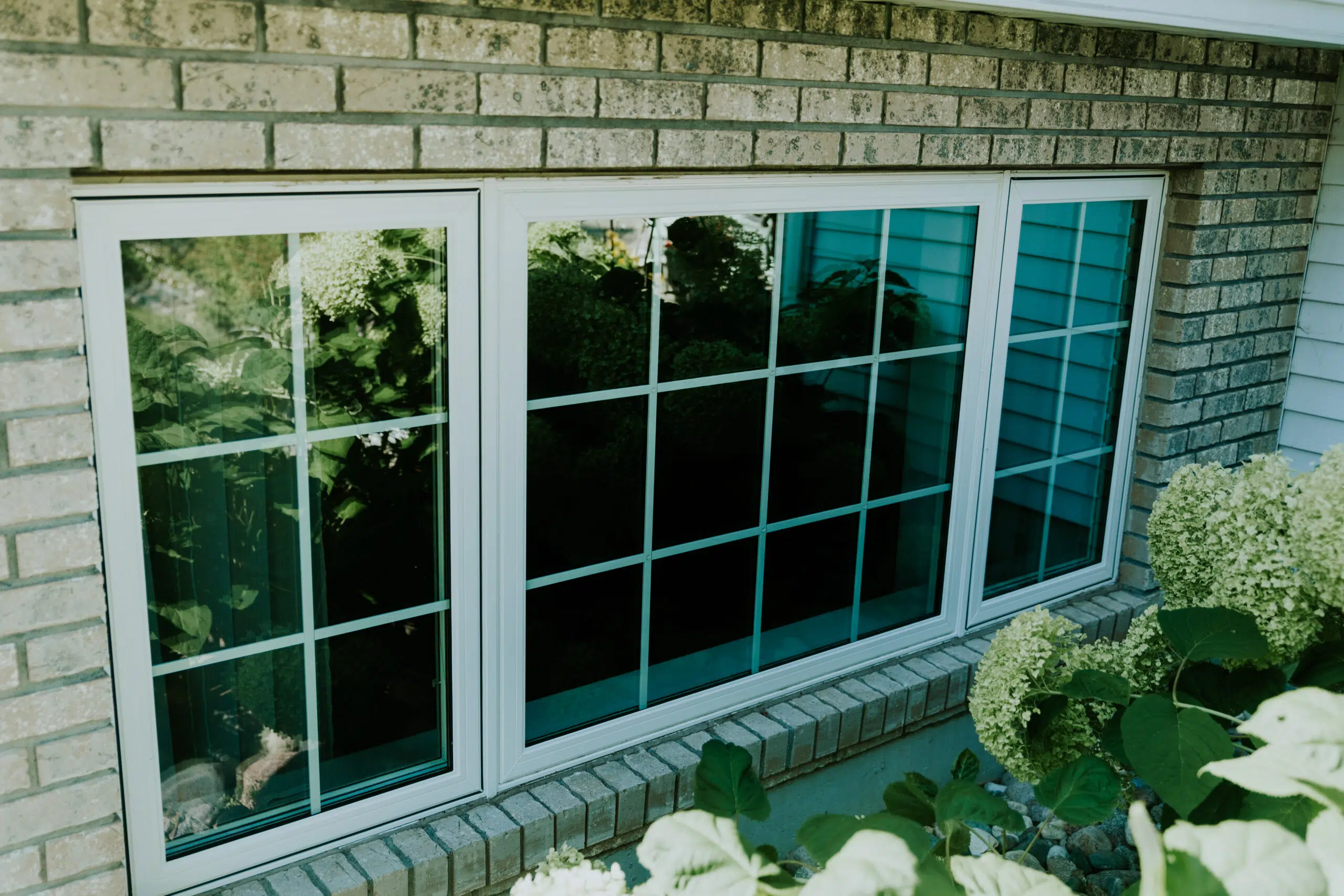
North Dakota Demands More From Your Windows
Bismarck averages more than 51 days a year below 0°F; Fargo sees 45+. Both swing 100°F or more between their coldest and warmest days. That constant expansion and contraction is one of the primary failure mechanisms for replacement windows — inferior frames grow brittle, weatherstripping loses compression, corner seals crack, and argon gas leaches out of failed sealed units, dropping a window’s performance to near single-pane levels.
Beyond outright failure, poorly insulated windows create cold zones that cause condensation, interior frost, and radiant cold loss — rooms that feel uncomfortable even at a reasonable thermostat setting. In a region with some of the nation’s highest heating costs, a window that underperforms thermally costs you money every day of the heating season.
What Makes a Window ‘North Dakota Ready’?
Triple-Pane Glass
Three glass layers create two insulating chambers instead of one, sharply reducing heat transfer through the glass — the main path for thermal loss.
Argon or Krypton Fill
Inert gas between the panes slows convective heat transfer far better than air. Krypton insulates better in thinner configurations.
Low-E Coating
Microscopic coatings reflect heat back into the room in winter and block solar gain in summer. For ND homes, Low-E is a baseline requirement, not an upgrade.
Low U-Factor
U-factor measures how fast a window loses heat — lower is better. Target U-0.20 or below; ENERGY STAR Northern Zone’s U-0.27 is the floor, not the goal.
Foam-Filled Frames
Closed-cell polyurethane foam replaces the air cavity that conducts cold through the frame perimeter — eliminating a major thermal-bridging path.
ENERGY STAR Northern Zone
ENERGY STAR has four climate zones; Northern — covering Bismarck and Fargo — is the strictest. Look for Northern Zone certification specifically.
Triple-Pane vs. Double-Pane in ND
| Feature | Double-Pane | Triple-Pane |
|---|---|---|
| Glass layers | 2 | 3 |
| Gas chambers | 1 | 2 |
| Typical U-factor | 0.25–0.30 | 0.15–0.22 |
| Noise reduction | Moderate | Significantly better |
| Weight | Standard | Heavier — verify frame compatibility |
| Upfront cost | Lower | Higher |
| Cold-climate payback | Standard | Shorter than in warmer climates |
Honestly, triple-pane isn’t the right call for every window in every home. It shines on windows facing prevailing northwest winds, rooms that feel persistently cold, bedrooms with recurring condensation, and homes with older heating systems. For interior-facing or lower-traffic rooms, a quality double-pane window with Low-E glass and argon fill — properly installed — is still a major improvement. A triple-pane window installed with poor air sealing will underperform a double-pane installed correctly. The glass is only one part of the equation.
Why We Recommend Fiberglass for This Climate
Vinyl is a solid general-purpose frame, but it expands and contracts at a meaningfully higher rate than fiberglass across the temperature range ND windows face. Over years of thermal cycling, that movement stresses corner welds and weatherstripping seals.
Fiberglass has a thermal-expansion rate close to glass itself — so the frame and glass move together rather than against each other, a real structural advantage in a climate defined by extreme swings. Paired with closed-cell foam-filled construction, a fiberglass frame stays flexible and insulating well below zero, where an air cavity would simply conduct cold through the perimeter. We install fiberglass-framed, foam-filled windows with double- and triple-pane glass packages, ENERGY STAR certified for the Northern Zone, in all standard styles.
Installation Practices Built for ND
Closed-Cell Perimeter Foam
High-expansion, closed-cell foam that stays flexible at −30°F seals the gap between frame and rough opening. Standard low-expansion foam can shrink and crack in extreme cold, opening air-infiltration paths.
Advanced Flashing Tapes
Flashing rated for extreme temperature ranges at every transition point — including the window-to-cladding intersection where most water infiltration begins.
Career Installers, Not Subs
We don’t use subcontracted labor. Our factory-trained crews have been installing windows in the ND market for years — and installation quality is what determines long-term performance.
Energy Savings You Can Expect
ENERGY STAR estimates that Northern-zone homeowners — which includes both Bismarck and Fargo — see meaningful annual savings upgrading from single-pane to certified windows. Savings from an existing double-pane are smaller but still real, especially for homes with multiple failed or underperforming units.
Triple-pane produces higher savings than double-pane in cold climates, because more heat escapes through the glass when it’s brutally cold outside — so the payback period in ND is materially shorter than in a warmer market. A quality window lasts 20–25 years; over that lifespan, the difference between a baseline and a premium window is a number worth running at purchase time. See our North Dakota window cost guide.
Window Replacement in Your Market
Bismarck →
Serving Bismarck, Mandan, and the surrounding Missouri River area.
See Bismarck window replacement →
Fargo →
Serving Fargo, West Fargo, Moorhead, and the Red River Valley.
See Fargo window replacement →
Explore window double-hung, casement, and sliding styles, or see all window replacement options.
Triple-Pane Window FAQs
What is the best U-factor for windows in North Dakota?
Target a U-factor of 0.20 or below for maximum thermal performance. ENERGY STAR Northern Zone requires U-0.27 as a minimum — use that as the floor when comparing products, not the goal.
Are triple-pane windows worth it in Fargo and Bismarck?
For windows facing prevailing northwest winds, rooms with persistent cold drafts, and bedrooms with condensation issues, yes — the payback is shorter in ND than in warmer climates. For other windows in a typical home, a quality double-pane system with Low-E glass and argon fill, professionally installed, delivers strong performance at lower cost.
Do you install ENERGY STAR certified windows?
Yes — the windows we install are ENERGY STAR certified for the Northern Zone, the most stringent ENERGY STAR climate category, which covers both Bismarck and Fargo.
How does a foam-filled frame reduce my heating bill?
Standard frames have an interior air cavity that conducts cold through the perimeter — thermal bridging. Foam-filled frames replace that cavity with closed-cell polyurethane, which insulates rather than conducts, keeping the frame edge warmer and cutting heat loss where most frame-conducted loss occurs.
Get Your Free Triple-Pane Window Estimate
We’ll assess which of your windows actually benefit from triple-pane, measure your openings, and give you one clear written quote. Bismarck: (701) 223-1008 · Fargo: (701) 205-0110

![logo[guild-quality]](https://www.thewdstore.com/wp-content/uploads/2018/01/logoguild-quality.jpg)